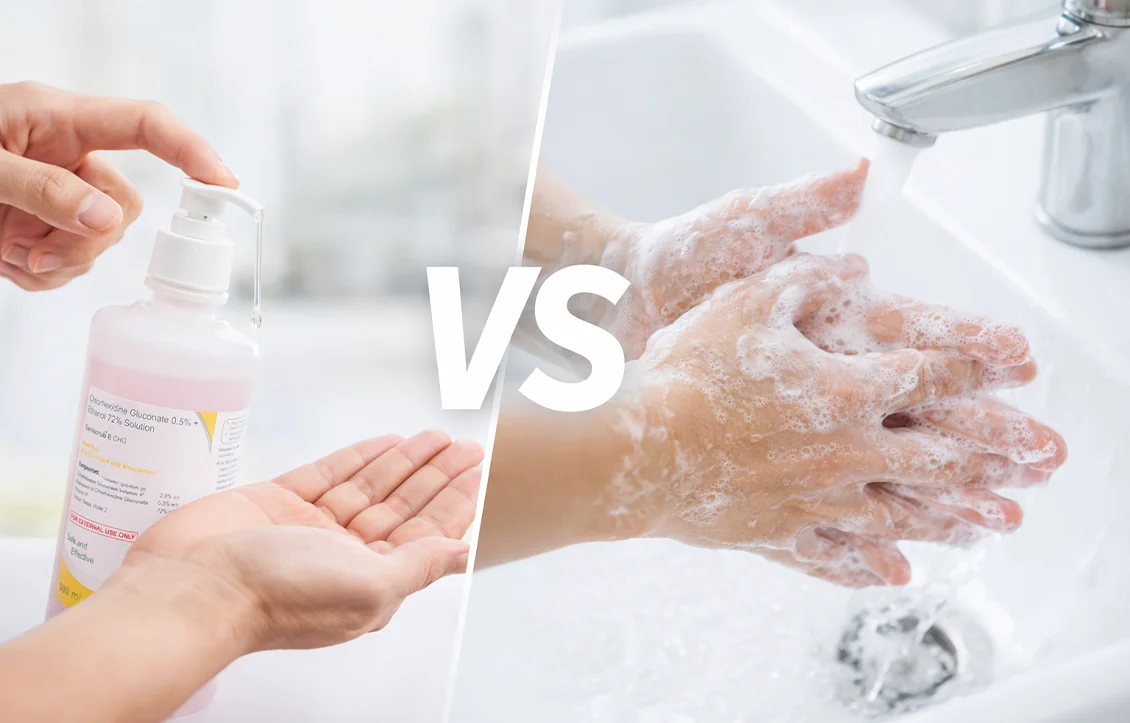
Adherence to hand hygiene compliance (HHC) protocols safeguards the well-being of healthcare professionals and patients equally. Hand hygiene means cleaning your hands with water and soap (e.g., plain soap or with an antiseptic), alcohol-based hand rubs (ABHRs) such as foam or gel hand sanitizer, or surgical hand antiseptics. Thoroughly cleaning your hands reduces the potential spread of deadly germs and limits pathogen transmission pathways to patients. In fact, ineffective handwashing can result in the spread of antimicrobial-resistant organisms (AMR), making you susceptible to severe and incurable infections.
Since healthcare personnel are directly involved in patient care, they are more prone to occupational exposure risks than others. They may need to sanitize their hands up to 100 times. They should wash their hands multiple times during a work session to ensure the safety of themselves, patients, and staff while reducing healthcare-associated infections (HAIs). A typical challenge is maintaining skin integrity on the palms due to repeated hand hygiene events. Let’s scroll down to understand which is an effective clinical hand decontamination tool in hospitals: an alcohol-based hand rub or a hand wash.
Hand Hygiene: Hand Sanitizer Vs. Hand Washing
The age-old debate between soap and water versus hand sanitizer is a perennial one among both healthcare providers and general consumers. There are distinct advantages and disadvantages to using chemical hand decontamination (hand sanitizer) compared to the mechanical hand cleansing method of washing hands with soap.
Hand sanitizer is effective in most cases, especially as a point-of-care hygiene solution, but the best approach to stay germ-free remains washing with soap and water, as scientifically proven. Another remarkable benefit of hand sanitizer is the workflow efficiency with which it may be used.
Among the many advantages of hand sanitizer, its ease of deployment stands out. Hand sanitizer is so convenient because it comes in portable dispensers that can be kept at patient bedsides, nurse stations, or high-traffic clinical zones. Additionally, in healthcare settings with limited access to a sink, hand sanitizer promotes continuous hygiene compliance.
Why Hand Washing Is Better than Hand Sanitizing
In fact, nothing surpasses the traditional method of washing your hands with soap and water. It is non-negotiable under infection prevention and control (IPC) guidelines in several contexts.
Although hand sanitizer is quite handy, it does have a few major limitations. Washing your hands with soap and water enables broad-spectrum microbial removal, whereas hand sanitizer may not effectively eliminate certain pathogens such as Salmonella and Staphylococcus. Additionally, hand sanitizer should not be used when hands are visibly soiled or oily due to organic matter interference. If hands are contaminated with dirt, grease, or bodily fluids, thorough handwashing is essential.
Regular hand washing with soap and water remains a first-line infection control measure for everyone, not just healthcare workers.
Why Hand Sanitizers Are Not Effective Everywhere
Although convenient, hand sanitizers—even with high alcohol concentrations—have limited biocidal efficacy against all infection-causing agents. Mainly due to the mode of action targeting coagulation and denaturation of proteins that may initiate the chances for the microorganism to create mutations to proteins, leading to resistance for the chemical.
Conventional soap-and-water washing remains the most effective method for removing pathogens such as norovirus, Cryptosporidium, and Clostridioides difficile, which demonstrate reduced susceptibility to alcohol-based agents. Soap-based washing supports physical removal of transient flora, including organisms that are more resistant than coronaviruses.
Clinical environments, where hands aren’t too dirty or oily, are ideal for using hand sanitizers, according to research. However, after managing patients for examination or curative procedures, one must perform a thorough hand wash. Sanitizers provide suboptimal biocidal effectiveness for the surfaces that people touch frequently, such as those in the workplace and public places. Additionally, hand sanitizer will not work if applied sparingly or removed before it dries entirely.
Even if they worked, hand sanitizers likely wouldn’t be able to neutralize or eliminate potentially dangerous organisms or toxins. Researchers have detected a higher concentration of pesticides in the bodies of individuals who reported using hand sanitizer for hand hygiene compared to handwashing.
Rinse thoroughly with water and soap if you have encounter hazardous chemicals, or follow the instructions given by the experts.
Role of Hand Sanitizers in Enhancing the Following Threats
1. Alcohol-Resistant Bacteria
Many studies indicate that sanitizers with alcohol concentrations between 60% and 95% are better at killing germs than products with a lower concentration or no alcohol. Lower concentrations result in sublethal microbial exposure, which may promote alcohol tolerance development in certain bacterial strains.
Alcohol Poisoning in Children
Although ABHRs are safe when used appropriately, accidental ingestion—especially among children—can result in acute ethanol toxicity. Pediatric exposure incidents highlight the importance of controlled access dispensing and supervised use.
Why Are Soaps More Effective in Hand Cleaning?
The most effective method for removing germs is washing hands with soap and running water, which produces a surfactant-mediated cleansing action. Soap molecules are very effective at disrupting the surface membranes of some microorganisms, like the novel coronavirus.
Furthermore, the friction created by lathering and scrubbing the hands thoroughly aids in clearing and washing away debris, grease, and germs under running water. Completely sanitizing your hands with soap requires a bit of time—at least 20 seconds.
The following are the CDC’s recommended handwashing steps that can significantly contribute to the protection of both you and your loved one:
- Apply soap after washing your hands with warm or cold running water.
- Rub the soap and make a lather by rubbing your hands together.
- Wash your hands thoroughly, including between your fingers, under your nails, and on your palms and backs.
- Wash your hands thoroughly under running water.
- Use a clean towel or let your hands air dry.
Conclusion
Although it’s not a comprehensive decontamination approach, if you are running short of time or there is an unavailability of water, you can disinfect with hand sanitizer that has at least 60% alcohol. However, according to regulatory-aligned hygiene guidance, the gold-standard hand hygiene practice to eliminate chemicals and all types of bacteria, including the novel coronavirus, is to use soap and water for thorough handwashing. The CDC suggests that washing your hands often for at least 20 seconds is a key measure in the hierarchy of infection control to stop the spread of the COVID-19 virus.
What makes soap and water a first-line defense against pathogen transmission over alcohol-based hand sanitizers? The answer simply lies in the fact that, unlike handwashing with soap, hand sanitizers do not provide 100% protection against infections.
For further information, contact the experts at Sirmaxo. Call us now!
FAQs
Q1: Can hand sanitizers replace handwashing completely?
A: No. Hand sanitizers are adjunct hygiene tools and cannot replace full mechanical hand cleansing.
Q2: How long should hands be washed with soap for effective hygiene?
A: A minimum 20-second mechanical handwash is required for effective microbial removal.
Q3: Is frequent use of hand sanitizer safe for children?
A: Pediatric hand hygiene requires supervised use due to ethanol toxicity risk.