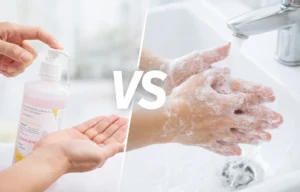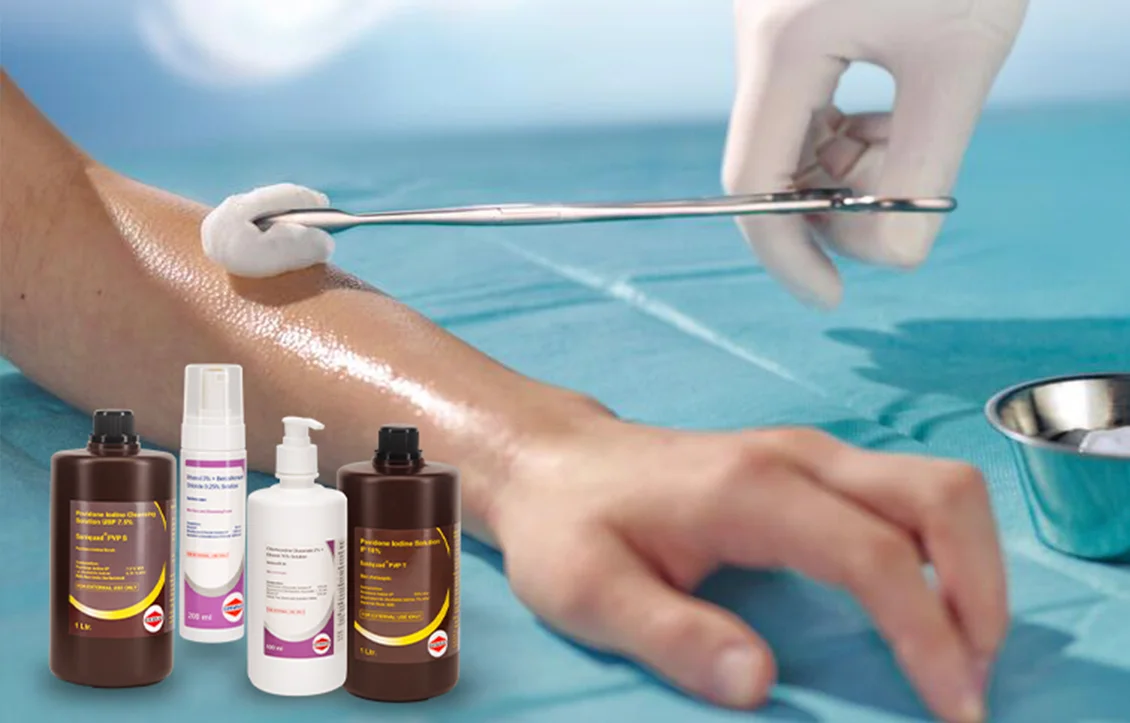
Skin antiseptics are chemical agents applied to the skin to decrease microbial load and prevent the transmission of infections. Healthcare professionals require them before surgeries, injections, and wound care to decrease the risk of surgical site and hospital‑acquired infections.
Beyond hospitals, industries such as food processing, hospitality, and manufacturing use skin antiseptics to maintain hygiene, safeguard workers, and maintain compliance with safety standards.
With rising awareness of infection control and outbreaks such as COVID‑19, routine use of skin antiseptics has become a vital part of both clinical and occupational health strategies globally.
What Are Skin Disinfectants (Antiseptics)?
Antiseptics are known as skin disinfectants used in the skin disinfection process. These are chemical agents applied to the skin to decrease the microbial count and lower the risk of surgical site infections (SSIs) or wound infections.
The Mechanism of Action
They damage microbial cell structures (membranes, proteins, and DNA/RNA) or disrupt essential metabolic processes. This kills or inhibits microorganisms on your skin, preventing potential infections.
Why is There Need of Skin Antiseptics in Hospitals
According to the National Guidelines for Infection Prevention and Control (MoHFW) in Healthcare Facilities, antiseptic application is recommended for the following purposes:
- Skin preparation
- Hand hygiene
- Insertion site sterilisation for catheter and medical device
- Pre- and Post-Operative Care
- Patient care
- Wound cleansing and dressing
They are critical for prepping the skin before surgery, injections, and catheter insertions to prevent bacteria from entering the body. Effective, high-grade hand disinfection is necessary for healthcare workers to protect both themselves and patients.
Regulatory bodies such as the CDC and WHO mandate strict infection control protocols, making high-efficacy agents (chlorhexidine, iodine, and alcohol) mandatory in hospitals.
Formulations Available at Sirmaxo
To meet the demand of healthcare settings, Sirmaxo provides its partners with high-quality skin disinfectant solutions aligned with the regulatory guidelines.
You can bulk order them today:
| Product Name | Composition | Where They are Used |
| Saniquad Neo G Gel | Chlorhexidine Gluconate Solution USP : 35.5% v/v (Equivalent to Chlorhexidine Gluconate : 7.1% w/v). | Skin antiseptic for prevention of umbilical cord infection in neonates. |
| Saniocten | Octenidine dihydrochloride: 0.1% w/v
2-Phenoxyethanol: 2.0% w/v |
For aqueous wounds and mucous membranes, wound Irrigation.
Safe for use on sensitive skin, lactating mothers, and pregnant women. |
| Saniquad PVP T | Povidone Iodine IP 10% w/v (i.e. 1% w/v available Iodine) | Pre-operative skin preparation.
Provides a clear colour delineation of areas to be disinfected. |
| Saniscrub C10 | Chlorhexidine gluconate solution IP: 10% v/v
Equivalent to Chlorhexidine gluconate: 2% W/v Isopropyl alcohol IP: 70% v/v |
Cleans the site before CVC insertion thus helps in preventing CRBSI or CVC colonization. |
| Saniscrub E 10 | Chlorhexidine Gluconate Solution BP : 10 % v/v
Equivalent to Chlorhexidine Gluconate : 2 % w/v |
Lowers the risk of blood stream infection, surgical site infection, UTIs etc. |
| Sanimousse | Ethanol IP : 3 % w/v
Benzalkonium Chloride Equivalent to Benzalkonium Chloride : 0.25 % w/v |
It prevents eczema, infectious skin diseases & bedsores. |
When Are Antiseptics on Skin Needed?
They are used for the following purposes:
1. Surgical Preparation
Doctors use them to cleanse skin before an incision. This prevents surgical site infections (SSIs).
2. Wound Care
Healthcare professionals can recommend antiseptic solutions for skin to clean minor cuts, scrapes, and burns to prevent bacteria from causing infection.
3. Hand Hygiene
They are used in surgical hand rubs or scrubs using alcohol-chlorhexidine formulations. This ensures prolonged antimicrobial activity during patient care.
4. Catheter Insertion
To decontaminate skin before inserting IVs or catheters to prevent patients’ bloodstream infections.
5. Skin Infections
A healthcare professional recommended them for treating certain skin conditions or superficial infections.
Types of Skin Disinfectants (Antiseptics)
1. Chlorhexidine Gluconate (CHG)
It has a broad spectrum against Gram-positive and Gram-negative bacteria. CHG is effective in surgical scrubs and skin prep and is often used in combination with alcohol.
2. Povidone-Iodine (PVP-I)
PVP-I releases free iodine that enters microbial cells and oxidizes proteins, enzymes, and nucleic acids to kill them. This is good for presurgical prep.
3. Alcohols (Ethanol, Isopropyl Alcohol)
It is fast-acting and known to denature microbial proteins and dissolve lipids in cell membranes to kill them. It is effective for skin disinfection and hand sanitizers; however can dry skin.
4. Chloroxylenol (PCMX)
It is the main active antiseptic ingredient in Dettol and is potent against Gram-positive bacteria. PCMX is good for general antiseptic washes.
5. Hydrogen Peroxide
It forms reactive oxygen species that damage DNA, proteins, and lipids inside microbial cells. However, hydrogen peroxide has limited use for routine due to expense and potential tissue damage.
6. Quaternary Ammonium Compounds (e.g., Benzalkonium Chloride)
Quaternary ammonium compounds are found in some first-aid creams, wound cleansers, and ophthalmic solutions for mild skin decontamination. These are known to disrupt microbial cell membranes to kill them; however, they are less effective against fungi or mycobacteria.
Difference Between Disinfectants and Antiseptics
Here is the basic difference:
Antiseptics
Used for living tissues such as skin and wounds. They have lower chemical concentrations.
Disinfectants
Used for non-living surfaces such as counters, floors, etc. They are used in stronger concentrations.
Antiseptic Solution for Skin
- Povidone-iodine (Betadine, Disilon P10, 3M Skin Prep)
It is used for:- Disinfecting minor cuts
- Burns
- Abrasions
- Preoperative skin preparation
- Chlorhexidine Gluconate (CHG) (Hibiclens, Savlon)
It is used for:- Pre-operative skin disinfection
- Healthcare handwashing
- Wound care
- Alcohols (Ethyl/Isopropyl) (Hand sanitizers, skin wipes)
It is used for:- Rapid skin disinfection before injections or blood draws
- Chloroxylenol (Dettol liquid)
It is used for:- Personal hygiene
- Minor wound cleansing
- Diluted household disinfection
- Hydrogen Peroxide
It is used for:- Wound cleansing
- Diluted mouthwash
Conclusion
Skin antiseptics play a crucial role in preventing infections in healthcare and various enterprise settings. Their continued use ensures safer clinical care and healthier workplaces worldwide. By lowering harmful microbes on the skin, healthcare workers and employees can maintain hygiene standards and outbreak preparedness.
Best Quality Skin Antiseptics in India | Sirmaxo
Sirmaxo has transformed India’s skin infection prevention landscape, as it is known as India’s largest skin antiseptic manufacturer.
We manufacture internationally certified products ranging from hand and skin antiseptics (for surgical and wound care) to surface, instrument, and water disinfectants. We have WHO–GMP certified facilities backed by cutting-edge manufacturing capabilities.
Searching for the best quality skin antiseptic for wound and surgical care?
You can contact Sirmaxo at info@sirmaxochem.in.
Phone number:
+91 22 42500800
+91 22 42500852
Our Address: 5th Floor, Satyanarayan Prasad Commercial Center, Dayaldas Lane, Off. Nehru Road, Vile Parle (E), Mumbai 400057, India.
FAQs
Q1: What is the best antiseptic for skin?
A: The best antiseptic for skin depends on the medical situation. However, chlorhexidine gluconate (available at Sirmaxo) is commonly used in healthcare facilities.
Q2: What kills bacteria on skin?
A: Topical antiseptics such as alcohol or chlorhexidine (use them when recommended) for skin surface cleaning. In general, good hygiene in daily life, good hygiene with soap and water, is effective in removing bacteria and preventing their growth.
Q3: What is the best antiseptic for open wounds?
A: The best option depends on the medical situation; however, your doctor may use Povidone-Iodine (PVP-I), Chlorhexidine (CHG), Octenidine, and Sodium Hypochlorite (NaOCl).